


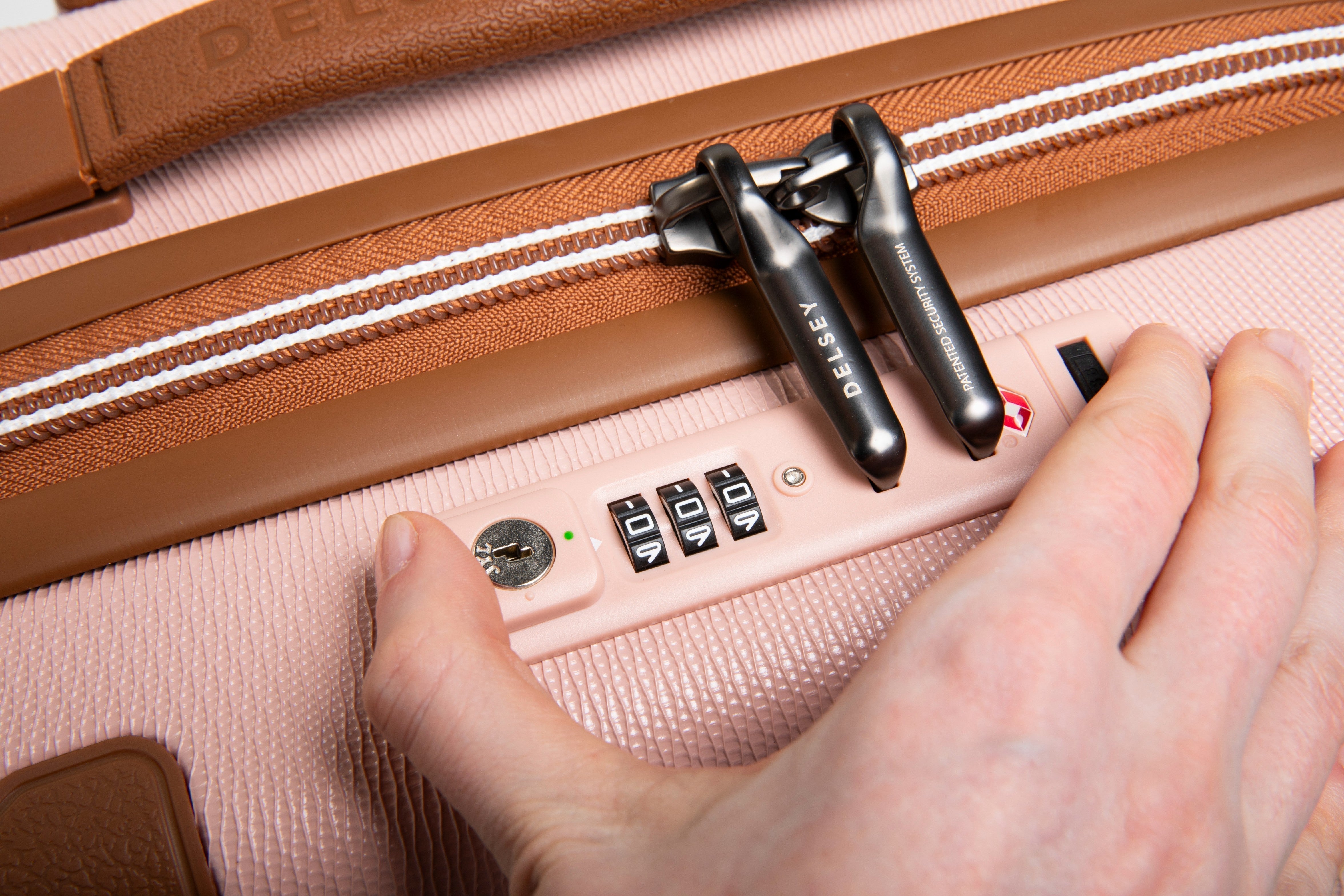
When it comes to securing your luggage, choosing the right lock can make a significant difference in protecting your belongings during travel. Whether you’re flying within India or preparing for an international trip, understanding how TSA locks and standard combination locks compare will help you decide which one suits your needs best.
This guide explains how each lock works, their security levels, convenience, cost, and how they perform during airport inspections.
What Is a TSA Lock?
A TSA lock is a security lock that can be opened by airport security officers using a universal master key. These locks are approved by the Transportation Security Administration (TSA) and are widely used in the United States and other countries where checked luggage may be opened for inspection.
You can identify TSA locks by the small red diamond symbol. Many modern suitcases include built-in TSA-approved locks for secure and convenient travel.
If your travel includes the U.S. or international airports that follow similar inspection procedures, using a TSA-approved lock helps prevent damage during airport inspections.
What Is a Combination Lock?
A combination lock uses a 3-digit or 4-digit code to secure your suitcase. External options from our luggage security collection provide added protection. Unlike TSA locks, standard combination locks cannot be opened by airport authorities unless they break the lock.
Combination locks provide good protection but can be less convenient if you forget your code or if the mechanism becomes jammed. They are best for travellers who prioritise security over inspection accessibility.
TSA Lock vs Combination Lock: Key Differences
Security Level
TSA Lock Security
-
Allows security officers to open and relock your bag without damaging it
-
Provides reasonable protection for everyday travel
-
May be vulnerable if someone has access to a TSA master key
-
Less robust than heavy-duty security padlocks.
Combination Lock Security
-
Security depends on the number of digits (4-digit locks are stronger than 3-digit)
-
Cannot be accessed by TSA without being cut
-
Some low-quality locks can be picked or forced open
Accessibility
TSA Lock Accessibility
-
Ideal for travellers flying to or through the U.S.
-
TSA can inspect your luggage without breaking the lock
-
Beneficial for checked baggage where inspection is common
Combination Lock Accessibility
-
Requires remembering your combination
-
TSA cannot open it without cutting or breaking the lock
-
Can be inconvenient if you forget the code
Risk of Lock Damage
TSA Lock Damage Risk
-
Lower chance of damage during airport inspections
-
Designed to be opened and relocked by security teams
-
Poor-quality TSA locks may malfunction or jam
Combination Lock Damage Risk
-
Higher risk of being cut off during screenings
-
Mechanisms can jam or get stuck if misused
-
TSA may break the lock if inspection is required
Cost Comparison
TSA Lock Cost
-
Usually priced between ₹600–₹1,500
-
Commonly integrated into modern suitcases
-
Worth the investment for seamless air travel
Combination Lock Cost
-
Typically more affordable (₹300–₹800)
-
Widely available in various styles
-
Premium models may cost more than TSA locks
Are TSA Locks Easily Picked?
TSA locks are convenient, but they are not the most secure option available. Some models can be bypassed if someone has access to a master key or specialised tools. If you are carrying high-value items, it’s better to place them in your carry-on luggage instead of relying solely on the lock. Keep valuables secure in your carry-on luggage during flights.
Travel Tip:
Even with a secure lock, avoid placing valuables such as jewellery, electronics, or important documents in checked baggage.
Can Airport Security Open My Luggage Without Me?
Yes. Airport security authorities are legally allowed to inspect checked bags without the passenger present.
If your suitcase is secured with a non-TSA lock, they may break it to conduct the inspection.
Using a TSA-approved lock helps ensure your bag can be opened and relocked without damage.
TSA Lock vs Combination Lock: Which Should You Choose?
Choose a TSA lock if:
-
You’re travelling to or through the United States
-
You want to avoid broken locks during inspections
-
You prefer convenience at airport security checks
Choose a combination lock if:
-
You’re travelling to destinations where TSA access isn’t required
-
You want a simple, cost-effective lock
-
You value stronger security over inspection access
There’s no universally right choice — it depends on your travel route and how much security or convenience you need.
Quick Summary
• TSA locks allow airport inspections without damage
• Combination locks offer simple security without inspection access
• Choose based on your destination and security preference
Final Recommendation
If your trip includes the U.S. or airports that follow TSA-style protocols, a TSA lock is the safer and more convenient option.
For domestic travel or situations where maximum security is a priority, a standard combination lock may be more suitable.
Travel smart by choosing the lock that matches your destination and luggage type.


